

Indonesia’s Data Sovereignty: Toward A Digital Transformation That Is Inclusive, Empowering, And Self-Determined Policy Brief, Publications April 14, 2026 This policy brief, produced by Kontika (2026), examines Indonesia’s data sovereignty challenge in the context of its rapidly expanding digital economy — projected to reach USD 360 billion by 2030. Despite having 229.4 million internet users and one of ASEAN’s largest digital economies, approximately 70–75% of Indonesia’s national data is stored and processed abroad, primarily in Singapore, while 85–90% of digital infrastructure relies on foreign technology. The brief employs a WHERE-WHO-HOW analytical framework to map three critical dimensions: data localization and infrastructure (WHERE), regulatory control and institutionalcapacity (WHO), and technological independence and innovation (HOW). It also addresses the cybersecurity dimension, highlighted by the June 2024 PDNS ransomware attack that paralyzed over 210 government institutions. Four strategic policy pillars are proposed: (1) accelerating four Tier-IV National Data Centers (PDN) and establishing a National Sovereign Cloud Consortium; (2) operationalizing the Personal Data Protection Authority (LPPDP) and harmonizing sectoral regulations; (3) building technological independence through a National Semiconductor Task Force and AI Centers of Excellence; and (4) consolidating cyber resilience through a National Government SOC and scaling active CSIRTs from 147 to 500 teams — all structured along a three-phase roadmap through 2030 Share: Indonesia’s Data Sovereignty: Toward A Digital Transformation That Is Inclusive, Empowering, And Self-Determined Author: KONTIKA Research Team Publisher: KONTIKA Research and Innovation Year: 2026 ISBN: Pending submission Format: PDF (E-book) Download Here
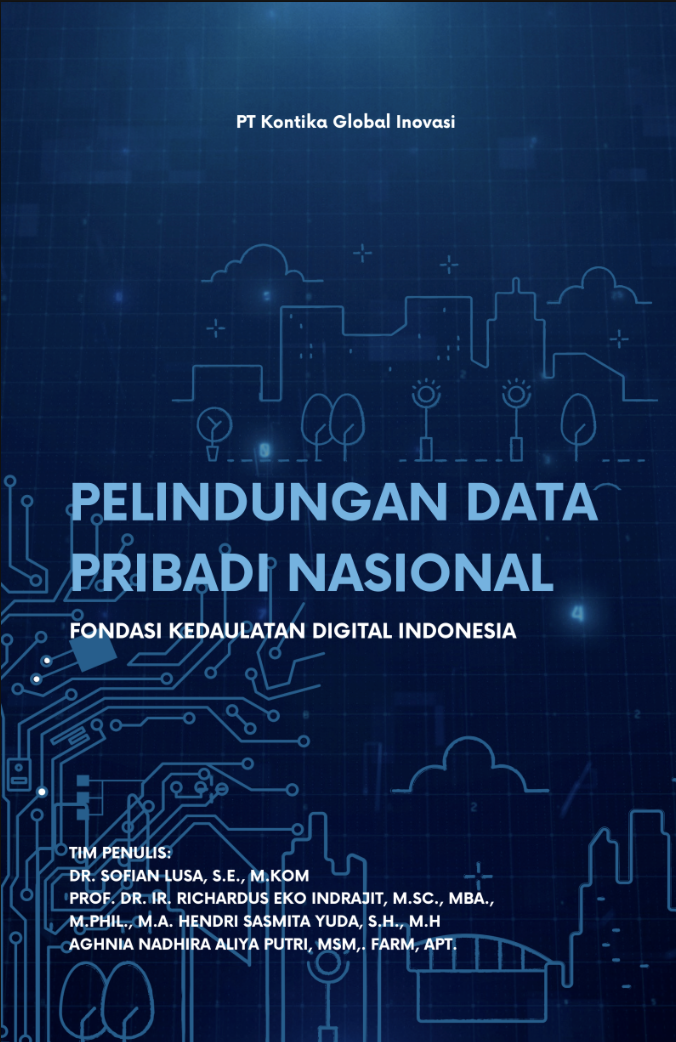
Pelindungan Data Pribadi Nasional Fondasi Kedaulatan Digital Indonesia
Pelindungan Data Pribadi Nasional Fondasi Kedaulatan Digital Indonesia Book, Publications October 20, 2025 Buku Pelindungan Data Pribadi Nasional — Fondasi Kedaulatan Digital Indonesia:Buku ini membuka dengan analogi yang tajam: seperti rempah-rempah di era kolonial, data kini diekstraksi dari Indonesia secara masif, diolah di pusat teknologi global, lalu dikembalikan dalam bentuk produk bernilai tinggi. Polanya sama, hanya mediumnya yang berbeda inilah yang disebut kolonialisme data. Dari sinilah urgensi kedaulatan data dan UU Pelindungan Data Pribadi No. 27 Tahun 2022 (UU PDP) berangkat.Buku ini mencakup tiga besar tema. Pertama, perjalanan regulasi dari era telekomunikasi (1961) hingga lahirnya UU PDP, yang menempatkan Indonesia sejajar dengan negara-negara yang mengakui kedaulatan data sebagai hak asasi warga negara. Buku ini mengurai filosofi, hak subjek data, kewajiban pengendali dan prosesor, serta perbandingan dengan GDPR Eropa dan regulasi internasional lainnya. Kedua, infrastruktur dan ekosistem digital Palapa Ring, Pusat Data Nasional, platform INA Digital (INApas, INAku, INAgov), hingga pengembangan talenta digital dan keamanan siber sebagai fondasi teknis pelindungan data. Ketiga, kesiapan dan implementasi penilaian kematangan sektor perbankan, kesehatan, pendidikan, e-commerce, dan pemerintahan, disertai rekomendasi kebijakan sektoral menuju Indonesia Emas 2045.Pesan inti buku ini jelas: regulasi sebaik apa pun hanya efektif jika dipahami dan dijalankan oleh semua pihak korporasi, penyelenggara sistem elektronik, pemerintah, hingga masyarakat sebagai subjek data. Melindungi data pribadi adalah melindungi martabat setiap warga negara di ruang digital. Share: Pelindungan Data Pribadi Nasional Fondasi Kedaulatan Digital Indonesia Penulis: Dr. Sofian Lusa, S.E., M.Kom Prof. Dr. Ir. Richardus Eko Indrajit, M.Sc., MBA., M.Phil., M.A. Hendri Sasmita Yuda, S.H., M.H Aghnia Nadhira Aliya Putri, MSM,. Farm, apt. Editor: Aprillia Anggraini Bukit, S.E.,MSM Penerbit: PT Kontika Global Inovasi Tahun: 2026 ISBN: 978-634-05-1791-0 Format: PDF (E-book) Unduh di sini

Streaming Platform Regulation: Lessons From The United Kingdom For Indonesia’s Growing And Protected Digital Ecosystem
Streaming Platform Regulation: Lessons From The United Kingdom For Indonesia’s Growing And Protected Digital Ecosystem Policy Brief, Publications April 14, 2026 This policy brief, produced by Kontika (2026) under the PakuPintar series, analyzes Indonesia’s Joint Ministerial Decree (SKB No. 9/PMK/2026) signed on March 12, 2026 — the country’s first comprehensive national framework regulating AI use across all educational levels, from early childhood to higher education. The decree introduces a tiered access model grounded in cognitive development theory: general AI chatbots are prohibited at the elementary level, supervised AI literacy is introduced at junior secondary, active AI use including prompt engineering is encouraged at senior secondary, and universities must include an AI Statement in academic works. The brief situates the policy within global debates on “brain rot” and “cognitive debt,” benchmarks it against approaches in Italy, Australia, China, and UNESCO, and proposes five recommendations: establishing educational AI certification criteria, scaling teacher training toward a mandatory AI curriculum by 2027–2028, instituting biennial regulatory reviews, developing a locally rooted EdTech ecosystem, and integrating AI literacy for parents across all 514 districts. Share: Streaming Platform Regulation: Lessons From The United Kingdom For Indonesia’s Growing And Protected Digital Ecosystem Author: KONTIKA Research Team Publisher: KONTIKA Research and Innovation Year: 2026 ISBN: Pending submission Format: PDF (E-book) Download Here

The Role of Strategic Consulting in Business Growth
In an increasingly complex business environment, organizations often face challenges in scaling operations and maintaining sustainable growth. Strategic consulting plays a crucial role in helping businesses identify opportunities, mitigate risks, and develop actionable plans. Consultants provide an objective perspective, backed by industry insights and data-driven analysis. From market entry strategies to organizational restructuring, their expertise enables companies to make confident and informed decisions. Ultimately, effective consulting partnerships empower businesses to adapt quickly and stay ahead of the competition.

Leveraging Data for Better Decision Making
Data has become one of the most valuable assets for modern organizations. When utilized effectively, it can drive smarter decision-making and enhance overall business performance. Organizations that implement strong data management practices can uncover meaningful insights, predict trends, and respond proactively to market changes. However, the challenge lies in transforming raw data into actionable intelligence. By combining the right tools, skilled talent, and clear strategies, companies can fully harness the power of data to achieve sustainable success.